

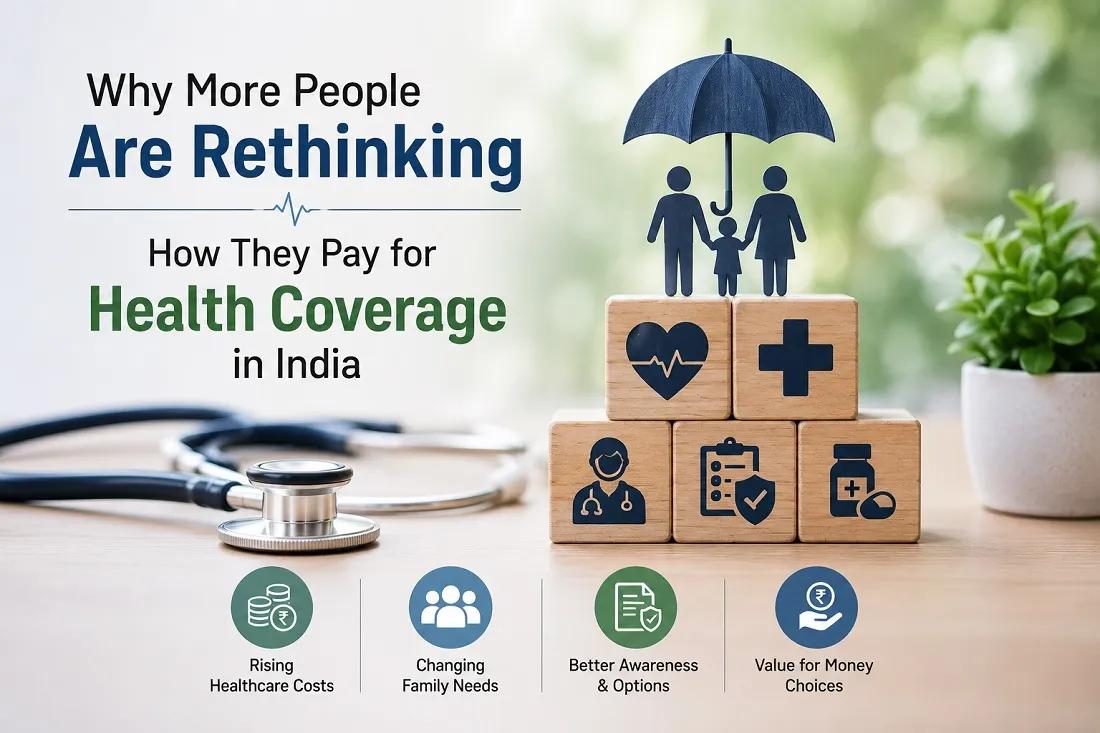
Medical emergencies usually tend to occur at the most terrible period. Savings that took years to build up can be drained by an unexpected illness, an unplanned hospital stay, or a family member needing surgery. Millions of Indians struggle to live without health insurance, often stating one reason above all others: the annual cost is too high to pay all at once. Health insurance exists specifically to prevent this kind of financial stress.
Many people know they need coverage but are unable to pay for it all at once, so insurance firms and financial institutions have had to re-evaluate how health policies are sold and paid for. As a result, middle-class and working-class families are gradually changing the way they make coverage selections.
Understanding the Premium Problem
Health insurance premiums in India are influenced by several factors, including:
The sum insured chosen
The policyholder's age
The number of family members covered
The type of health insurance plan selected
A family floater plan with ₹10 lakh or higher coverage may cost ₹12,000-₹40,000+ annually, depending on the insurer and the family's health profile.
For someone earning ₹35,000-₹50,000 a month, arranging an extra ₹25,000-₹30,000 annually for renewal can be difficult. It has competition from regular household expenses, rent, loan EMIs, and school tuition. Many people end up either choosing an inadequate plan with a lower sum insured or, worse, skipping renewal altogether, leaving their family exposed precisely when coverage matters most.
This isn’t a matter of irresponsibility. It is a structural mismatch between how insurance is priced (annually) and how most households actually manage cash flow (monthly).
Monthly Installments Are Changing the Equation
Plans where the premium can be divided into monthly or quarterly installments have been made available by a number of insurers and third-party platforms in recent years. The fundamental reasoning is simple: if an important one-time payment is the only barrier to purchasing health insurance, then lowering that payment to a reasonable monthly sum completely eliminates the barrier.
Some insurers offer this directly as a monthly premium option built into their plan structure. Others have partnered with banks and non-banking financial companies (NBFCs) to allow policyholders to finance the premium. In both cases, coverage is typically active once the policy is issued, and the insured person pays in smaller installments over the policy year.
For self-employed and gig workers who don’t have a set monthly pay and find it more difficult to budget for yearly lump sums, this concept has proven very successful. A contract worker, small shop owner, or freelance designer may make a respectable living throughout the year but find it difficult to commit a significant sum at any one moment.
What to Watch Out For
Paying premiums in installments does come with trade-offs. In most cases, there is a small additional cost for choosing this option, either a convenience fee or a marginal interest component. This implies that paying the annual premium upfront may be slightly less than the entire amount paid over the course of the year.
Policyholders must also pay close attention to the dates of payments. A delay in coverage may result from missing an installment, which would defeat the purpose of the plan. Read the fine print on what happens if a payment is missed or delayed, as well as whether there is a grace period, before choosing any staggered payment plan.
There is also the question of plan comparability. This option is not available from all insurers, and those that do may not offer it for all their products. Even the most comprehensive plans with the largest hospital networks could still need an annual payment. Customers must weigh the quality of the plan they are choosing against the ease of lesser payments.
The Role of Digital Tools in Planning
One of the most useful developments alongside flexible payment options is the availability of online tools that help potential policyholders understand exactly what they will pay and when. Before committing to any plan, it makes so much sense to spend time modeling different scenarios, varying the sum insured, the number of family members, the payment frequency, and the plan tier, to understand the full cost of ownership.
Planning your health coverage has become far more transparent in the digital era. Anyone considering a policy that is structured as a financed arrangement should use an insurance loan calculator to estimate the total cost across the policy term. You can input the initial premium amount, the relevant interest rate, and the repayment period into such calculators, which are available on the majority of insurance provider websites. This provides you with an overview of how each installment will look and how much extra you might be paying for the ease of spacing out payments. By being mindful of this amount in advance, you can prevent unexpected costs and compare paying in full vs. spreading the expense in a way that is truly informed.
The possibility of purchasing health insurance on an EMI may be the only thing that convinces those who have never had health coverage to decide to get insurance. One of the most important financial decisions a household can make is to go from being uninsured to having a live, active policy. For many, the slightly higher total cost may be justified if this modification is made available by dividing the premium into monthly installments. The most important thing is that the coverage is available when you need it