

Most riders never get the most out of their superbikes. In fact, they don’t even come close. But whenever one passes by, it surely turns heads and sparks conversations. Along with it comes the desire to own one.
There is something about a superbike that feels larger than life. It is not just speed. It is the idea of speed. It shows the edge of what engineering can do on two wheels. Before you get carried away with that desire, here’s everything you should know about a superbike.
The Machines Built Without Compromise
Superbikes are not meant to be comfortable. They’re not your typical daily commute bikes. A superbike prioritises performance over practicality. The frames are made out of lightweight aluminium.
Lightweight aluminium frames. High-revving engines. Aggressive aerodynamics. Stiff suspension tuned for precision rather than softness.
The riding position itself tells you everything. Low clip-on handlebars. Rear-set footpegs. A tucked-in posture that reduces drag at high speeds.
These machines are influenced heavily by racing. What works on a circuit slowly finds its way into production models. Over time, technology that once belonged only to professional riders becomes available to enthusiasts.
What Actually Makes a Superbike Different?
It is easy to confuse a sportbike with a superbike. They may look similar, but the engineering underneath is very different.
A litre-class superbike typically has:
An engine close to 1000 cc
Power output exceeding 200 horsepower
Advanced electronics with multiple riding modes
Traction control and wheelie control
Quickshifters for clutchless gear changes
Modern systems use IMUs (Inertial Measurement Units) to monitor lean angle, acceleration, and braking forces in real time. This allows the bike to adjust traction and stability while cornering.
The result is not just raw speed. It is controlled aggression. Power that can be managed.
The Truth About Top Speed
Top speed is often the headline number. It is the figure people search for first. But in reality, it is only one small part of the story.
Reaching extreme speeds depends on many factors:
Power-to-weight ratio
Aerodynamic efficiency
Gear ratios
Electronic limiters
Most modern superbikes are electronically restricted to prevent exceeding safe limits. Even when they are not, achieving maximum speed requires long, controlled stretches of road or a professional circuit.
In everyday riding, acceleration matters far more. The surge from 0 to 100 km/h. The pull out of corners. The stability at high speeds. These are the qualities riders actually feel.
Why Most Riders Will Never Need That Much Performance
On Indian roads, speed limits and traffic conditions naturally restrict how much performance can be used. Urban congestion, unpredictable obstacles, and mixed road surfaces demand awareness more than outright power.
A superbike’s full potential belongs on a racetrack. That is where braking zones are predictable. Corners are consistent. Safety measures are in place.
This does not make superbikes impractical. It simply means their capabilities exceed normal requirements. They are built to do more than most riders will ever ask of them. That gap between capability and necessity is part of their mystique.
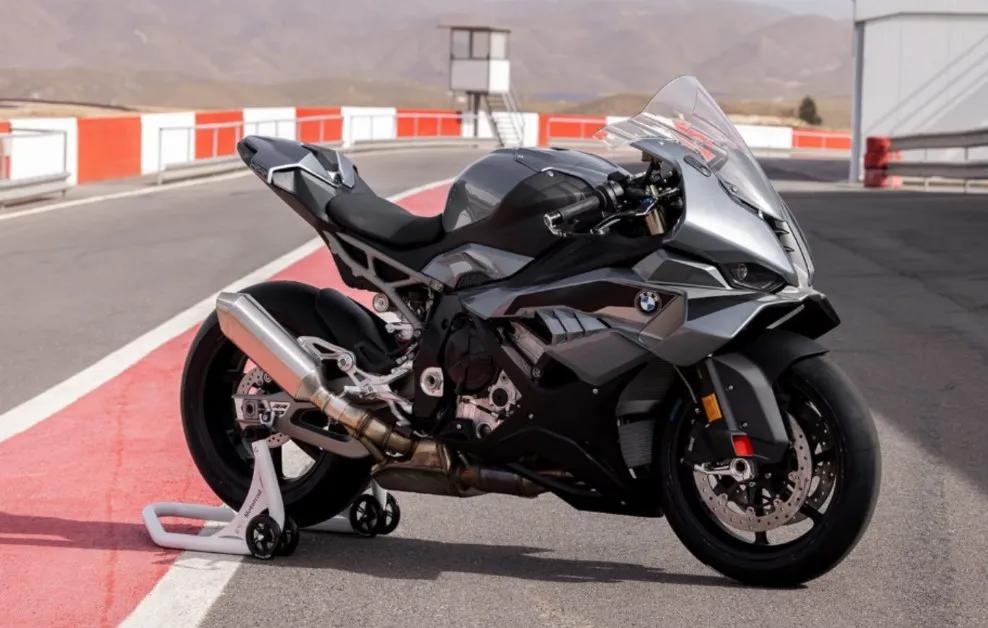
One example of such engineering philosophy is the BMW S1000RR. A 999 cc inline-four engine powers it. The same produces over 200 horsepower. Therefore, it rests in the litre-class superbike category. The bike also has advanced rider aids. That means dynamic traction control and multiple riding modes, wheelie control, and launch control. The lightweight chassis and aerodynamic winglets are added specifically to give better stability even when at high speed. Everything about the bike shows a track-focused approach, best suited to India, where the track isn’t linear.
When people search for the BMW S1000RR top speed, they are usually expecting a single number. In reality, the answer is electronically limited. It can be achieved only under controlled conditions. What truly defines the machine is how quickly it accelerates, how confidently it corners and how perfectly it responds to the rider’s input.
The Purpose of Going to the Extreme
Superbikes exist because pushing limits drives innovation. The technologies developed for them eventually influence other segments. Braking systems improve. Electronics become smarter. Safety features evolve.
Even if most riders never use 100 per cent of what a superbike offers, knowing that the capability exists is part of the appeal. It represents ambition. Precision. Engineering at its sharpest.
And perhaps that is why superbikes continue to fascinate us. Not because we need that level of performance every day, but because it shows what is possible when performance is the only priority.