

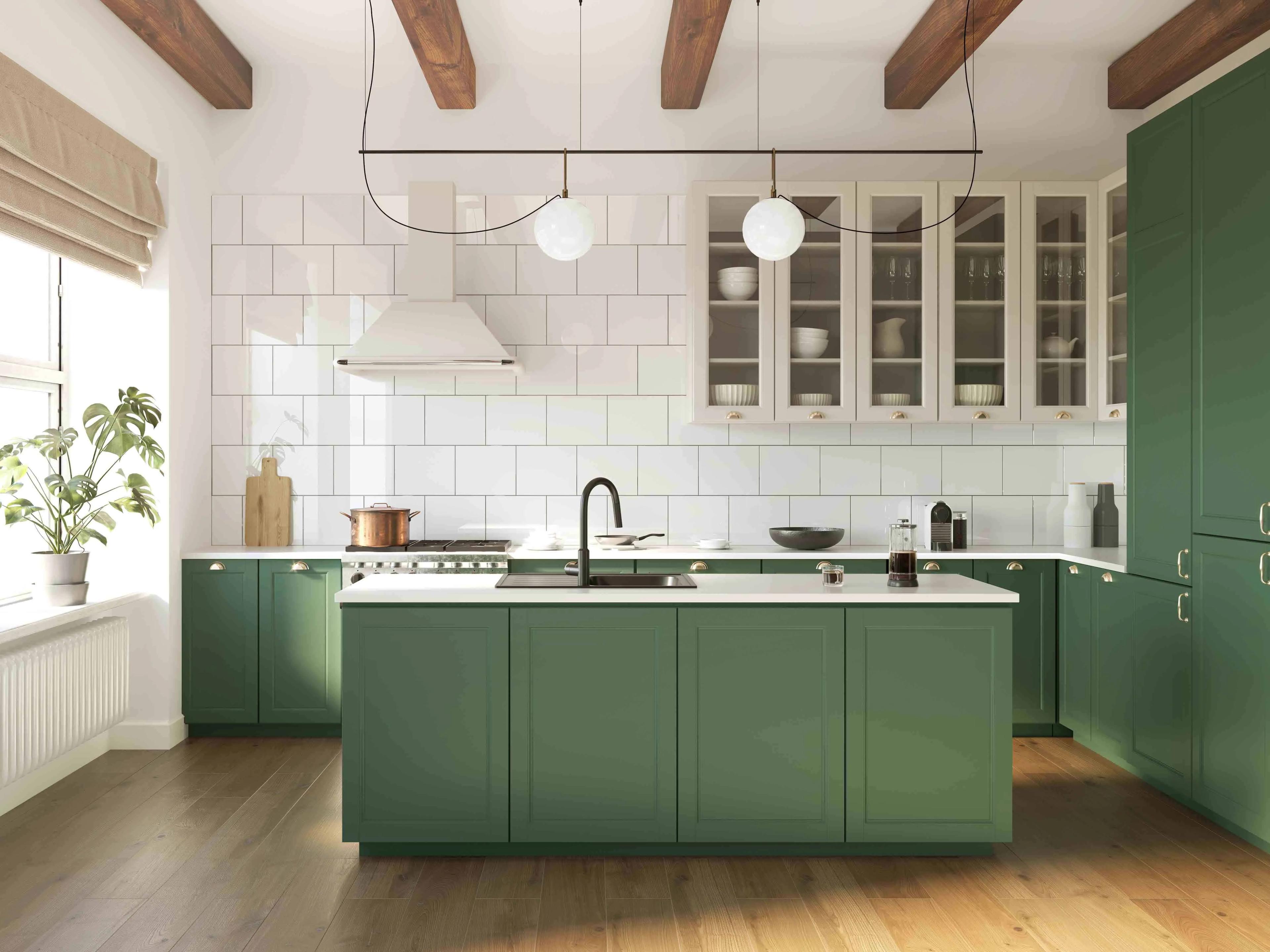
Kitchens and electrical areas are the busiest areas in a home. These sections are concerned with heat, wiring, appliances, and everyday use. The danger of unintentional exposure to fire also grows with the rise in activity. The material selection, therefore, becomes a structural selection and not a decorative selection.
Homeowners are not concerned with the exterior appearance but with the interior performance criteria. They want materials that are safer and do not interfere with design continuity. This is where Firewall technology enters residential planning. It provides a controlled fire resistance coating to the plywood core.
When considering Plywood as a material in kitchen cabinets and wall units, fire performance should not be omitted. Aesthetics should include safety and not be in opposition to it.
Familiarity with Firewall Technology in Interior Applications:
Modern homes are founded on concealed wiring, built-in appliances, and compact designs. These features increase the heat concentration in certain regions. Traditional plywood may be utilized to reinforce structure, yet enhanced fire performance is an added safeguard.
Firewall technology is meant to slow down the rate of flame spread during the first exposure. This latency can provide valuable response time in unexpected events. It strengthens the internal structure of plywood without altering surface finish or workability.
Kitchens have cabinetry that surrounds cooking appliances, chimneys, and electrical fittings. The decision to use Plywood in the kitchen with higher resistance improves the structural security in the long run. The surface is practical, and the core is safety-enhancing.
Improving Kitchen Cabinet Structures:
Kitchens generate heat daily through gas stoves, induction systems, ovens, and electrical sockets. The materials surrounding it might be stressed gradually due to constant exposure to heat. Durable plywood must therefore be a compromise between moisture resistance and thermal resilience.
Cabinets of firewall technology offer additional security in busy places. The plywood core is not reactive to fire exposure like the traditional boards. This internal resistance helps to slow down the rate of combustion.
When families choose to use Plywood as a storage unit in the kitchen, they are likely to pay attention to durability and finish. However, fire-resistant performance incorporation increases reliability. The cabinetry is aesthetically beautiful and assists in structural integrity in harsh environments.
Protecting Electrical Zones using Material Choice:
Wooden structures are normally fitted with power outlets, electrical distribution boards, and concealed wiring paths. These installations require materials surrounding them that do not encourage the propagation of fire in case of short circuits.
The use of plywood with Firewall technology in these areas is another protection layer. The treated composition works to counter the high velocity of flames on the surface and core. This defense mechanism reduces structural vulnerability.
The Plywood to be used on the walls of the kitchen and the electrical panels to be used in the kitchen should be the same to ensure that there is uniformity in the performance of the material. Cooking and wiring zones are given the same level of protection. This uniformity increases confidence in interior planning decisions.
Modular and Contemporary Designs have the following advantages:
Modern kitchens are based on the modular design with smooth cabinets and built-in appliances. Contemporary interiors are marked by straight lines and flat shutters. The safety enhancements must therefore be integrated without sacrificing aesthetics.
Firewall technology allows plywood to maintain its machining flexibility and surface compatibility. Designers can use laminates and finishes without compromising. This gives continuity to the visual and enhances internal resistance.
Homeowners who are considering alternatives to Plywood to use in their kitchen projects appreciate materials that are structurally sound and flexible in design. Fire-resistant performance should be invisible yet effective in modular structures.
Long-Term Reliability in Active Homes:
Kitchens are in use throughout the day and are typically the center of family life. The cyclic nature of use, heat cycles, and electrical load demand requires materials that are stable over time. Fire safety considerations are therefore not restricted to emergency response.
Firewall technology Plywood is developed to operate in high-risk environments. Its treated composition contributes to durability and controlled flame resistance. This uniformity results in structural confidence over the long run.
Reliable Plywood in kitchen cabinetry reduces the need to make early replacements. It also aids in general household safety planning. Responsible home ownership entails reliable material.
Safety vs. Interior Planning:
In the past, fire-resistant materials were applied in commercial premises only. The contemporary residential design is increasingly sophisticated in terms of protective features. Homeowners know that prevention begins with simple materials.
Plywood can no longer be used as a structural material, except with the introduction of Firewall technology. It becomes a component of kitchen and electrical safety plans. This design is in accordance with the present requirements of performance-based interiors.
When specifying Plywood to be used in installations in the kitchen, planners have come to consider internal treatment standards and surface finishes. Safety and aesthetics do not act alone.
A Conscientious Choice in Contemporary Homes:
Kitchens and electrical areas should be carefully selected in terms of materials, as these areas are more susceptible to heat and wiring risks. Fire-resistant plywood performance improves structural preparedness.
Firewall technology is added to engineered plywood to make it more resistant to flame spread without compromising usability. This balance encourages modular design, cabinetry strength, and integrated electrical planning.
Internal safety treatment is a viable factor for homeowners who prefer to use trusted Plywood in their kitchen. Firewall Plywood by CenturyPly is one such move, combining structural strength with advanced protective technology.